

 English
 Français
 Español
 Deutsch
 日本語
日本語

-
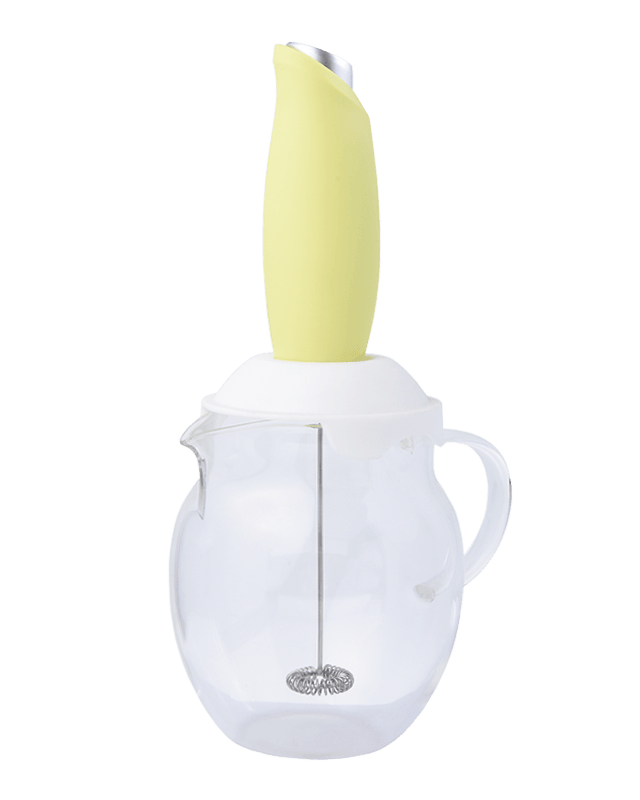
1. Bowl geometry and its impact on vortex formation: The overall shape of the bowl in a Coffee Mixer is a fundamental factor in creating an efficient and stable vortex, which is critical for uniform mixing. Bowls with a rounded base and gently sloping sides naturally guide ingredients toward the center, ensuring that powders, liquids, and syrups are continuously pulled into the mixing zone. This design reduces the formation of “dead zones” near corners or flat edges, where ingredients can otherwise accumulate and remain unmixed. In addition, a well-optimized geometry enhances the spiral motion of the mixture, promoting a consistent and homogeneous blend of all components. By enabling the formation of a controlled vortex, the bowl reduces clumping and ensures that every particle or droplet is efficiently incorporated, which is particularly important for coffee beverages that require uniform texture, such as cappuccinos, frappes, or flavored latte blends.
-
2. Bowl size and capacity considerations for efficient circulation: The dimensions of the bowl—including depth, diameter, and volume—directly influence the efficiency of ingredient circulation. In a Coffee Mixer, a bowl that is too small relative to the batch can result in splashing, overflow, or incomplete blending, as ingredients may not have sufficient space to circulate freely. Conversely, a bowl that is excessively large can diminish the natural vortex effect, requiring longer mixing times or higher motor speeds to achieve the desired homogeneity. By carefully matching bowl size to intended batch volume, manufacturers ensure that ingredients are consistently pulled into the central mixing area while minimizing wasted energy and maximizing motor efficiency. This precise scaling is particularly important for commercial mixers where consistent results are required across multiple batch sizes throughout a busy service period.
-
3. Material selection and surface finish for optimal flow: The material and internal surface finish of a Coffee Mixer bowl play a critical role in ingredient circulation. High-quality stainless steel or food-grade non-stick coatings reduce friction and prevent powders like cocoa, sugar, or coffee grounds from adhering to the walls. This facilitates continuous movement of ingredients toward the vortex, maintaining consistent mixing efficiency and reducing product waste. Moreover, smooth and corrosion-resistant surfaces support hygiene and simplify cleaning, which is essential for both home and commercial applications. Maintaining smooth flow along the bowl walls ensures that ingredients are evenly suspended in liquids and incorporated thoroughly, preventing uneven texture or inconsistent flavor profiles.
-
4. Interaction with blade design for effective circulation: The bowl’s shape must complement the mixer blade configuration to maximize mixing efficiency. In a Coffee Mixer, the distance between the blades and the bowl’s walls, as well as the slope of the sides, dictates how effectively the ingredients are cycled toward the center. Properly aligned blade and bowl geometries ensure that all ingredients repeatedly pass through the mixing zone, preventing unmixed pockets. For instance, angled or offset blades work in concert with the rounded bowl to generate turbulence while maintaining a coherent vortex, ensuring smooth emulsification of milk, syrups, and coffee powders. This synergy between bowl and blade design is crucial for achieving consistent foam, crema, or blended textures in specialty beverages.
-
5. Effects on mixing speed, motor efficiency, and energy consumption: An efficiently designed bowl reduces the mechanical load on the mixer motor by promoting natural ingredient circulation. In a Coffee Mixer, a well-formed vortex ensures that ingredients flow smoothly into the blades, allowing the mixer to reach the desired consistency faster without excessive energy expenditure. This efficiency not only shortens mixing times but also reduces wear on the motor, enhancing the longevity of the equipment. Conversely, a poorly designed bowl can create stagnant zones, requiring higher speeds or longer cycles, which increases energy consumption and may produce uneven results, negatively affecting both product quality and operational costs.
-
6. Specialty beverage precision and multi-stage mixing: For applications involving complex coffee beverages, such as layered drinks, frappes, or aerated milk, the bowl design is critical in controlling how ingredients interact. A Coffee Mixer with an optimized bowl facilitates gradual and controlled incorporation of powders, syrups, or milk, preventing premature frothing, separation, or formation of air pockets. This precision allows baristas or home users to achieve consistent texture, flavor distribution, and visual appeal across batches. The bowl design can support multi-stage mixing processes where ingredients are added sequentially, ensuring that each component is fully integrated before the next addition.